
Sandy Steers was an American environmental activist, biologist, and long-term executive director of the nonprofit Friends of Big Bear Valley (FOBBV), which runs the popular Big Bear Eagle Nest Cam. Through the decades of advocacy and stewardship in the San Bernardino Mountains of California, Steers was recognized as a spokesperson of wildlife protection in the Big Bear area.
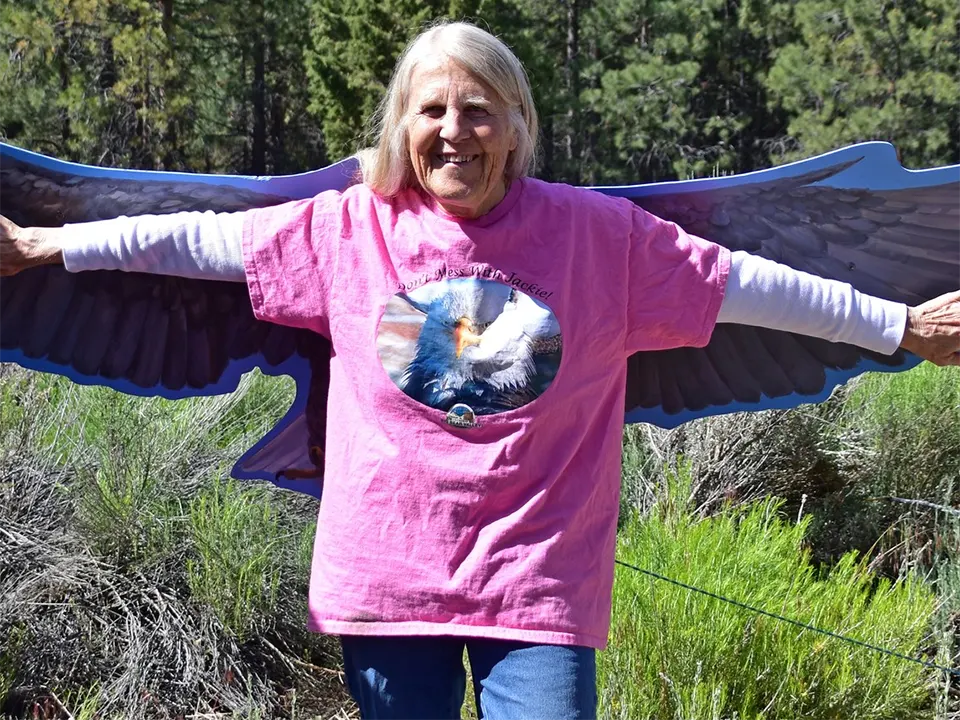
Her work contributed to saving important habitats, telling the world about the local ecosystems, and bringing the activities of the community conserving those habitats to the international level. By the time of her death in February 2026, she had a legacy as a grassroots organizer and an early communicator representing threatened and rare species.
Sandy Steers Biography | |
|---|---|
| Real Name: | Sandy Steers |
| Birth Date: | 1953 |
| Age (as of 2025): | 73 |
| Residence: | Long Beach, California, USA |
| Height: | – |
| Husband: | – |
Early Life
Sandy Steers was born in 1953, probably in the United States, but public records do not provide her place of birth. She went on to achieve a higher education in a science field, completing a degree in biology at the University of California, Los Angeles (UCLA) after she started her education in aerospace engineering at Purdue University.
In her early career, however, Steers had toiled at NASA at Edwards Air Force Base, according to reporting in the Los Angeles Times and elsewhere, a period of her career that indicated an intellectual depth and technical capability before she became entirely engaged in environmental work.
Her academic and work experience in her early years, in both engineering and biological sciences, predetermined her subsequent capacity to approach complicated ecological problems both scientifically and creatively. Her colleagues said that she was intellectually curious and flexible and could bridge technical research with outreach and community mobilization.
She went on to establish and operate a technology consulting firm and do creative work as a screenwriter and film producer, showing a unique combination of scientific, entrepreneurial, and artistic abilities. These varying experiences formed the foundation for her future success in nonprofit conservation, where there would be an intersection of science, technology, and interaction with the public.
Sandy Steers Career
The longest-standing professional activity of Sandy Steers was her leadership of Friends of Big Bear Valley (FOBBV), a nonprofit organization created to conserve the biodiversity, open spaces, and threatened species in the area. She got deeply engaged in local habitat conservation, environmental education, and wildlife advocacy after relocating to the Big Bear Lake region in the early 2000s.
Under her leadership, FOBBV concentrated on conserving species of rare plants, including the pebble plain and the endangered paintbrush flower, and also on conserving whole ecosystems against the pressures of development. Among her other notable accomplishments in 2015 was the Big Bear Eagle Nest Cam, a live streaming camera aimed at two bald eagles known as Jackie and Shadow.
The Eagle Nest Cam was an international phenomenon, gaining over one million followers and offering an educational value to the lives, behavior, and resiliency of bald eagles. Steers did not see the project as a webcam only, but as an opportunity to inspire empathy with wildlife, educate people in ecological literacy, and create popular support of conservation policy.
Sandy Steers frequently described the nest cam as creating a space of shared emotional connection between individuals and remote ecosystems, which proved effective in moving local environmental concerns to a global level. Another important role of the steers was to counter a series of proposed development projects that threatened undeveloped habitats.
She used grassroots campaigning, coalition building, and community outreach to slow or prevent projects that would have broken the sensitive landscapes surrounding Big Bear Valley. Her activism was marked by respect for both science and local communities—she stressed the importance of listening to stakeholders, basing advocacy on facts, and balancing various interests.
Coworkers and observers would often call her a Renaissance woman due to her broad career path, starting with early NASA involvement, to business CEO, and eventually, environmental caretaking. She had a passion for inquiry, integrity, and serving the people at every stage.
Social Media
Sandy Steers did not have a personal social media profile, unlike most of the public figures of the digital age. Rather, Sandy Steers relied on formal Friends of Big Bear Valley communication systems to communicate updates, conservation alerts, and programming that would be relevant to habitat protection.
On these platforms, she personally published most of the outreach content, which informed tens of thousands of followers about the local wildlife, ecological threats, and stewardship opportunities. Her voice was not centered around her name account, but it was through the community-centered platforms she had constructed and assisted in running.
Personal Life
The personal life of Sandy Steers was relatively confidential, especially when it came to romantic relationships or family information. In the public reporting and obituaries, her identity as an environmental advocate devoid of personal relationships, including spouses or partners, is highlighted.
According to trusted news sources, certain information regarding a spouse or children has not been made publicly available, as the privacy of surviving family members as they grieve following her death had to be honored.
Sandy Steers’s Net Worth
No net worth or estate estimate of Sandy Steers is publicly known. Previously, her main preoccupations were with her leadership in nonprofits and conservation instead of either a corporate or entertainment success that would spawn wide-ranging financial reporting. Her career targeted advocacy, raising funds to protect habitats, and managing nonprofits, as opposed to those actions that tend to make people wealthy.